The Crossing: Two Basque Families Come to California
This is Part 1 of a three-part series. Part 2: Growing Up Basque American • Part 3: Reclaiming Citizenship
Listen while you read
Txoria Txori (The Bird is a Bird) — a Basque anthem about freedom.
Red for sacrifice — the blood of ancestors who made the crossing
Jaureguy is a Basque surname. The Basques are a distinct people native to the western Pyrenees, spanning northern Spain and southwestern France. Their language, Euskara, is a true language isolate—no confirmed relationship to any other known language family. Genetic work suggests Basques share the same broad Western European roots as their neighbors, but became more genetically distinct through reduced mixing and strong local structure since at least the Iron Age—likely reinforced by geography, community boundaries, and language.
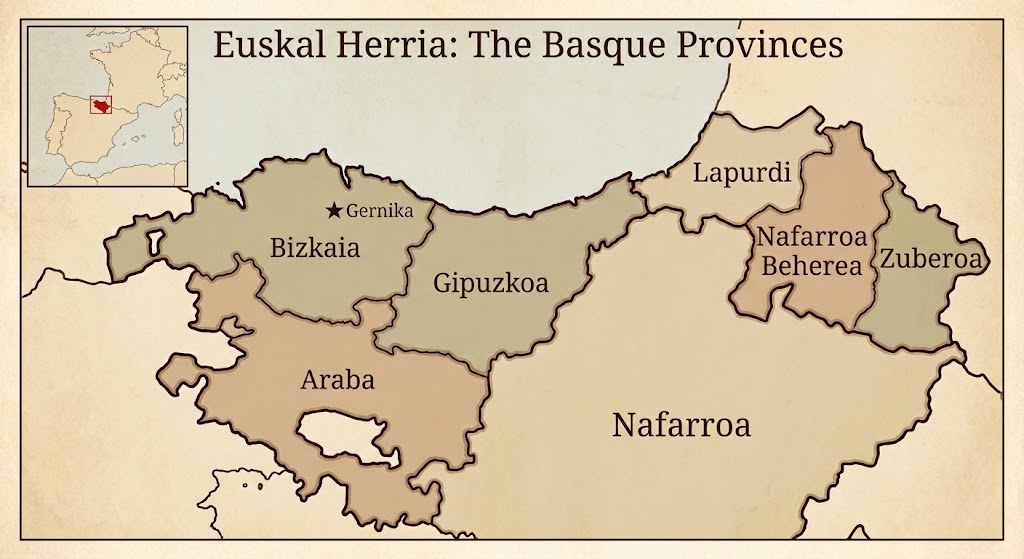
Euskal Herria: The seven Basque provinces spanning Spain and France, with Gernika marked.
This is the story of two Basque families, Changala and Jaureguy, and how they became Californian while staying Basque.
Pedro Changala (1883–1939)
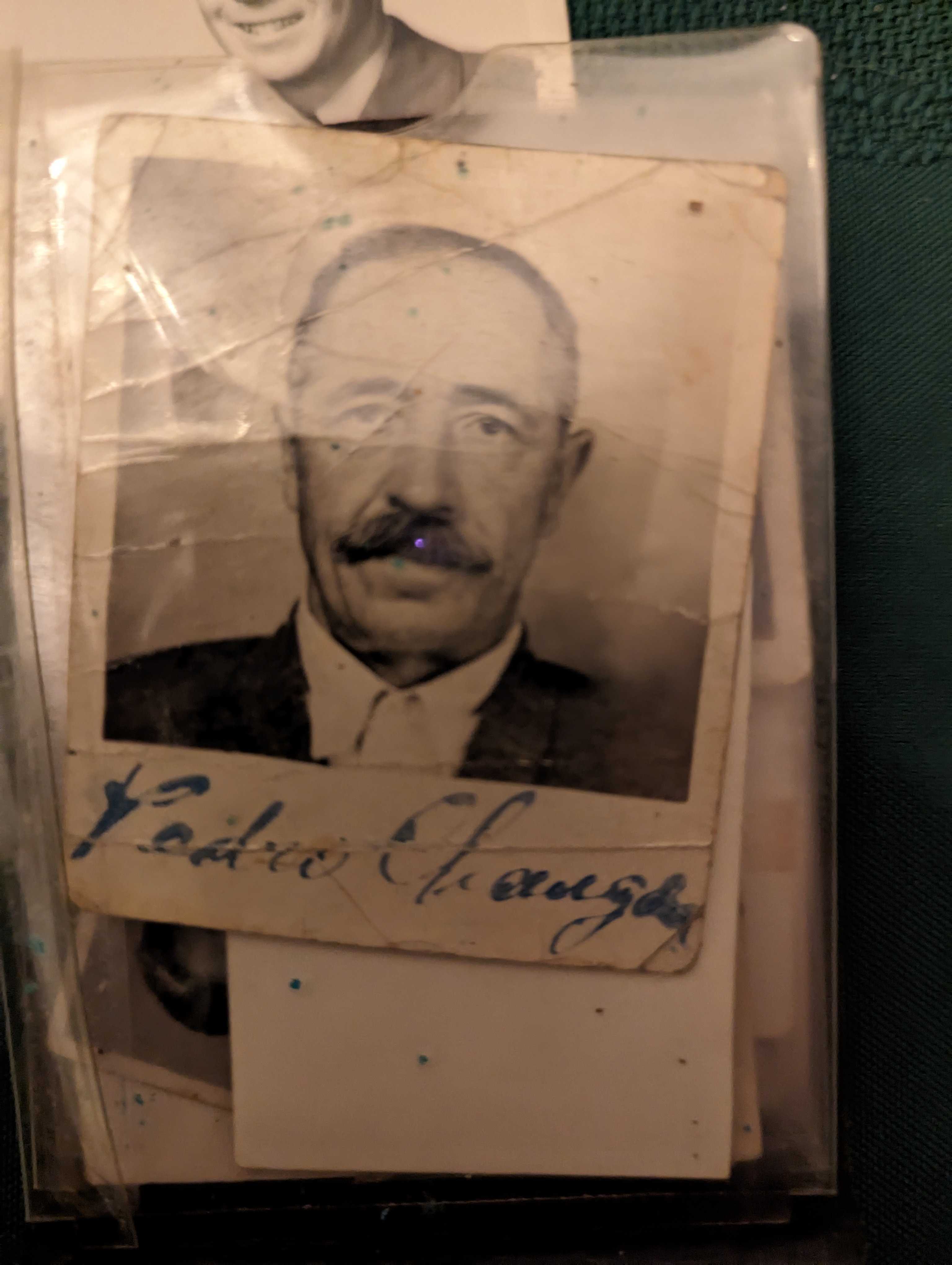
Pedro Changala (1883–1939). Changala family collection.
My great-grandfather Pedro Changala was born in 1883 in Navarre, Spanish Basque Country. He arrived in the USA in 1904 at age 21, like so many young Basque men looking for opportunity in the American West.
Basque immigrants started coming during the Gold Rush. When the gold didn’t pan out, many turned to what they knew: herding sheep in the mountains. The Sierra Nevada and the high deserts of the Great Basin weren’t so different from the Pyrenees.
The work was brutal. Months alone in the mountains with a dog and a few thousand sheep. No English required. For young Basque men with few options back home, it was a way to make money and eventually bring family over.
Pedro never became a naturalized citizen. Historical records list him as a non-citizen on his WWI Draft registration (1917-1918), the 1920 Census, and the 1930 Census. He died in 1939, having raised 12 children in California, all of them “Spanish de origen” at birth.
You can trace the full family tree on Bridge2Pyrenees, a genealogy project documenting Basque families across the diaspora.
Mary Louise Changala: My Amatchi
Amatchi (ah-MAH-chee): Basque for “grandmother”
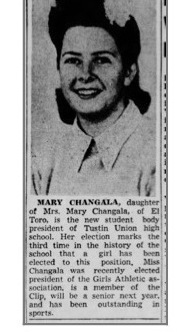
Mary Changala elected Student Body President—only the third girl in school history.
Santa Ana Register, June 27, 1942, Page 5
My amatchi Mary Louise Changala was Pedro’s eighth child, born in 1924 in El Toro. She was a trailblazer before that word existed—Student Body President at Tustin Union High School (only the third girl ever elected), President of the Girls Athletic Association, outstanding in sports.
She married my aitaxtxi Martin on January 14, 1950, in Las Vegas. Together they raised my father in the Basque way: showing up at the picnics, playing mus, keeping the names.
She died in 2001. I was eleven and didn’t understand yet what I was losing.
Martin Jaureguy: My Aitaxtxi
Aitaxtxi (eye-TAHCH-ee): Basque for “grandfather”
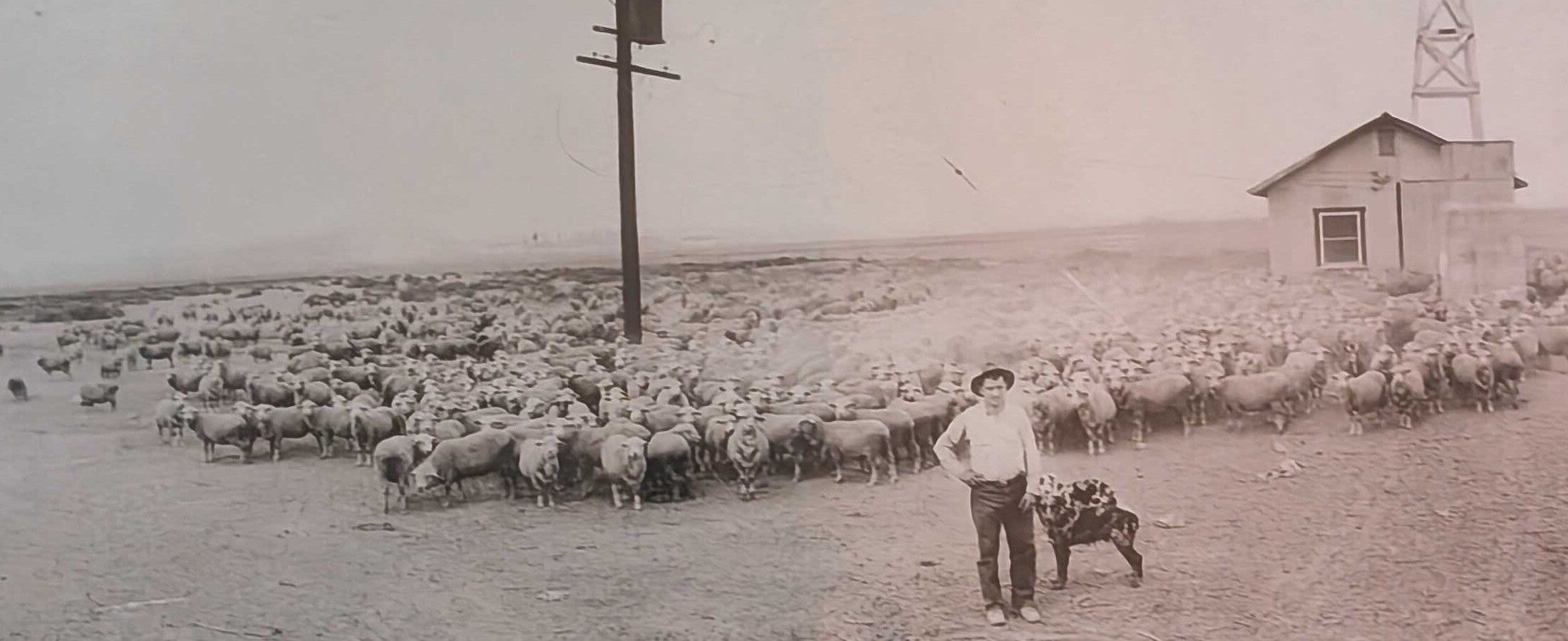
Martin Jaureguy with his flock in California. WW2 veteran, Basque sheepherder. Jaureguy family collection.
On my father’s side, my aitaxtxi Martin Edward Jaureguy was born in 1922 in La Puente—second-generation California, but still in the sheep business his father brought from the Pyrenees. His father, Martin Sr., had immigrated from St. Etienne de Baigorry in 1913.
My aitaxtxi served in WW2 and was stationed in Japan during the occupation. He boxed there—and came home with a samurai sword that fascinated me as a kid. After the war, he returned to the life he knew: running sheep across California, from LA north to the Central Valley.
He taught me mus—the Basque card game full of bluffs, signals, and shouting hordago! when you’re all in. He taught me to notice things. He taught me to ask questions.
“Always keep asking questions, Jeff.”
— Martin Jaureguy, my aitaxtxi
I wish I had asked more while he was alive. He died in 2014 at 92. I have the memories, but I’m missing the stories I never thought to ask for.
Why This Matters to Me (As a Geneticist)
“Present-day Basques are best described as a typical Iron Age population without the admixture events that later affected the rest of Iberia.”
— Olalde et al., Science, 2019
What makes Basques distinctive isn’t ancient isolation. It’s recent isolation. While the rest of Iberia experienced genetic influx from Roman expansion, Moorish conquest, and later European migrations, the Basques remained genetically isolated since the Iron Age (~3,000 years ago). The largest genomic study to date (Flores-Bello et al., 2021) found that Basques cluster separately from all other Iberians, with the genetic boundary matching the linguistic one. It’s one of the rare cases where my day job and my family story sit on the same page. When I think about inheritance, what persists and what gets diluted, I’m thinking about my family in two senses at once.
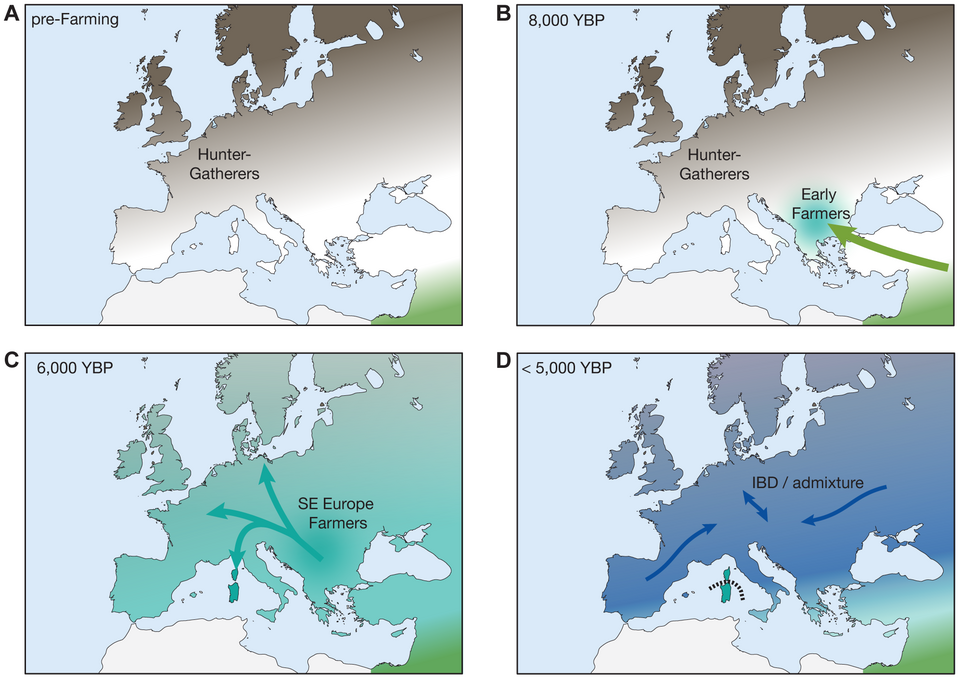
Genetic migrations into Europe over millennia. The Basque region shows remarkable continuity.
References
-
Günther, T. et al. (2015). Ancient genomes link early farmers from Atapuerca in Spain to modern-day Basques. PNAS, 112(38), 11917–11922. DOI
-
Olalde, I. et al. (2019). The genomic history of the Iberian Peninsula over the past 8000 years. Science, 363(6432), 1230–1234. DOI
-
Flores-Bello, A. et al. (2021). Genetic origins, singularity, and heterogeneity of Basques. Current Biology, 31(10), 2167–2177. DOI
Soundtrack: Txoria Txori (The Bird is a Bird)
Next: Part 2: Growing Up Basque American — Chino picnics, dancing, and the card game mus
Discussion
Sign in with GitHub to comment
Loading comments...